Monday, July 28, 2008


The idea of secession is something I written about on this forum a number of times. It is not something that I was planning on writing about again, but in the last few days the subject has come up on Christian Forums and on a couple of my favourite blogs. So I want to make just a few brief comments on the subject.

I would like to know what my anti-secessionists friends thought of the secession movements that were supported in Eastern Europe in the last few decades?

Was it wrong for Lithuania, Estonia, Latvia, Ukraine, Byelorussia, Georgia, etc... to seceded from the Soviet Union?

If so why did the U.S. support these acts of secession.

We also supported many areas of Yugoslavia in their bids to break with that country. Croatia, Slovenia, Bosnia all seceded from Yugoslavia and we supported them. We even sent troops to help them do so.

Our governments latest support for secession was when Kosovo broke with Serbia just last February.

Would we support a Canadian war on Quebec if the people there voted to break with Canada?

What about the Scots. What if they were to seceded from the U.K.?

Both of these peoples have strong secession movements and secesssion for either or both lands is very possible. The right to secession is an important aspect of liberty. I am for liberty and freedom. I do believe secession is a big and very serious deal and should not be something that we do over minor issues, but if it is off the table we are not truly a FREE people.

You can read about my views on secession and our own U.S. Constitution at the two following links:
Secession Discussion

The Constitution and Secession

Deo Vindice,
Kenith

Ps. Here is part of a post I recently wrote on Christian Forums, "Now back to the point. Was secession legal? Yes. Was it just for the North to make war on the South for opting for independence from the USA as in then existed. I say NO. It was an unlawful war. It was a war of aggression by the North and a war of defence by the Southern states.

"If Quebec were to seceded from Canada would it be lawful for Canada to force Quebec to re-join by invasion and war?

"What if the Scots were to opt to leave the UK. Should England make them stay in the union by killing several hundred thousand Scottish defenders?I think the Southern understanding of the Constitution and States Rights is what was accomplished by ratifying the Constitution in 1788. The War brought an end to the Federation that was formed by the Constitution We no longer say, 'These United States are' and now say 'The United States is.' That is a radical/revolutionary change in our form of Government. It was accomplished by Lincoln and 600,000 men killed and the South laid waste for 80 years.

"God has determined this to be, just as he determined that Babylon should destroy sinful Judah. The winner is not necessarily the more just, though it is part of God's righteous judgement. The South did practice an unbiblical form of race based slavery. The Lord ended that system in a horrific way. That is as it is.

"Does this mean that Southern secession was therefore wrong? No. Southern secession was lawful and that is a very different discussion than the discussion of slavery."

Saturday, July 19, 2008


Some years ago I got into an email debate with a Baptist friend about Christians drinking alcohol. It was an interesting discussion, but it was also an eye opener for me. My friend is a conservative, independent Baptist but in our debate he resorted to arguments that are more in line with liberalism.

I believe that the Bible (Old and New Testament) clearly allows for the people of God to drink wine and "strong drink."

My Baptist friend, who believes that the Bible is the Word of God, used very twisted logic to try and argue that wine in the Bible, when used by God’s people, was only grape juice and not an alcoholic beverage.

When pressed about his position with Scripture, my friend switched his argument from "the Bible" to “social” reasons for Christians not to use alcohol. He argued that it was a “bad witness” to drink a beer or wine in front of a non-believer or an alcoholic.

I have found that many of my conservative, Protestant Christian, brethren that hold to “abstinence only” often use liberal "like" reasoning and make “social” arguments when defending their position that Christians should not drink alcohol.

In this discussion with my friend it became clear that his “biblical” arguments could not and did not hold water; neither did his “social” argument, so he soon bowed out of the discussion, saying that we would have to agree to disagree.

I was disappointed by the way the discussion turned out, but I was not surprised. It had happened before, when I’ve discussed this issue with conservative Christians who are opposed to wine, beer, etc... Sadly, most conservative Protestants don’t know what the Bible actually says on this subject. They also don’t know anything about their own Protestant history.

Let's look at this issue in American history:

Q: Why did the Pilgrims settle at Plymouth?
A: They were running low on beer, and other food, but “especially our beer.”

Here is a quote from Pilgrim leader, William Bradford, "So, in the morning, after we had called on GOD for direction, we came to this resolution, To go presently ashore again; and to take a better view of two places which we thought most fitting for us. For we could not now take time for further search or consideration: our victuals being much spent, especially our beer; and it being now the 20th of December."

Beer is an important part of America’s history, even the history of conservative, Protestant, Americans.

I had a few cold beers today after mowing the lawn. God is so good to give us such wonderful gifts like beer and wine.

Coram Deo,
Kenith

Wednesday, June 25, 2008


Philip Melanchthon is one of my heroes of the time of the Protestant Reformation. Phillip was one of the great minds of his day. He, like Martin Bucer, was a reformer who managed to be held in high regard by friend and foe alike.


Melachthon was, for his on day, a man far ahead of his time. Philip was not willing to compromise on essential issues, but he was always looking for ways to bring about unity and for ways to fix the shattered church. Philip was Luther's right hand man, but he was very unlike Luther in many ways. Luther could be violent and ugly in his polemical writings, while Melanchthan tended to be polite and kind to those he was arguing against.


Philip's view on the Eucharist was closer to Calvin's position than it was to Luther's position, and Philip work with Calvin to bring the Reformed and Lutheran Churches together. Both of these men were willing to bend on non-essentials for the sake of greater unity. Both of these men were vehemently attacked by doctrianal (hyper) purists for this work of unity.


Things do not change. There are theologians today who are willing to split hairs and divide and spout anathemas at all who disagree with their subsection of split haired doctrine. We need more Melanchthons today.


Coram Deo,

Kenith

Monday, June 09, 2008

Test


Every few years I take a test similar to the Political Compass test and I have consistently landed in the same place:


I am a slightly right/libertarian. I believe this is becuse I am a conservative Christian who believes that the state is controlled by fallen men, so it must be limited in authority. The state can not stop all evil, but it does have limited authority which comes from God.The state is only one of the institutions established by God. The family is the most basic of God ordained institutions, church and state are also God ordained as or other institutions. All authoritative institutions are limited in authority, therefore we have liberty to do what is right and good.

Take the test.

Knith

Saturday, April 19, 2008


I am, obviously, a Cajun descended from the Acadians exiled from Acadia (modern Nova Scotia) in the 1750's. On this blog I mostly write about how I view religion and history, but a major part of who I am is my South Louisiana heritage. It is a cultural Gumbo, influenced by many that has grown out of the coming together of many cultures. Acadian, French, Spanish, African, German, etc.... The dominate culture was, until the mid 20th century, mostly Acadian/French with strong African/French undercurrents. Music is important part of our Culture.

Our native language (Cajun/Creole) was systematically attacked for most of the 20th century, until it has been almost destroyed. I know more French than most of my generation and I am very far from fluent. My parents, like most parent of my peers, did not teach us French, because they had been punished for speaking French and were made to be ashamed of the language when they attended school. If you spoke French on the school grounds, even if you knew no English, you were punished.


I pray and work for it's renaissance of our almost lost language.

Here are some links to examples of cajun/Creole Zydeco music on You Tube:


Some more modern Cajun/Creole music:


This is just a very small sample of South Louisiana music. Laissez les Bon Temps Rouler


Coram Deo,
Kenith

Sunday, April 13, 2008


Pope Julius II (reign 1503- 1513) is more popularly remembered as the “Warrior Pope.” His given name is Giuliano della Rovere and he was born in 1543. He was educated by the Franciscans and entered the priesthood.In 1471 his uncle Francesco became Pope Sixtus IV. After his uncle took the Chair of Peter, and in the same year, young Giuliano became first and bishop and then a cardinal in the Church.

Pope Julius had only one child, a daughter named Felice. The mother of his daughter was Lucrezia Normanni. To his credit, Julius was very unlike his predecessor Alexander VI, because he did not use his high office to aggrandize his child.Even though Cardinal della Rovere had an affair that produced a daughter, there were persistent rumors that he was also a homosexual. These rumors endured while he was pope and there is circumstantial evidence that appear to give credence regarding the accuracy of those rumors.

As Pope, Julius was interested in expanding the secular dominions of the Papacy. He spent much of time as pope at war and involved in political intrigues. He had his mind set on expanding his earthly kingdom and not on forwarding the Gospel and Kingdom of Christ. The Pope was, at times, a better military leader than his generals and was happy to lead a siege to over take a castle are city that he wanted subdued. The French King, James I, said to in a conversation to Pope Leo X, "Holy Father, Do not wonder that all these were the enemies of Pope Julius, because he was our (i.e. France) chief enemy, and we have not known in our time a more terrible adversary in war than Pope Julius; for he was in truth a most skilful captain and would have made a better general of an army than a pope of Rome."

Julius, as pope, was constantly involved in intrigues and creating alliances against his enemies. His first target was the city of Venice, because it stood in the way of his expansionist ideas. When Venice was defeated, he formed new alliances to attack France, whom he had allied with to make war on Venice. When the expenses of war had nearly exhausted his treasury Julius created new Cardinals who paid handsomely for the positions and thereby allowed him to continue his militaristic ambitions.

Julius II was Pope when Luther visited Rome, sent there on a mission by his Augustinian order. When Luther came to Rome he found corrupt and decadent city and a pope far more interested in worldly kingdoms than in the Kingdom of our Lord.During the Pontificate of Julius II there were, as was ever common, calls for “reform” of the church just as there had been for hundreds of years before, but Julius, while he might wink at the idea, and even called a council, was not interested in spiritual reform.

Resentment, do to the ever present and growing corruptions, had been building for so long, a reaction was bound to occur. ItIn the years of the Pope that who followed Julius II the Western Church explode and divided into schism, reform, and revolution. The next pope was Leo X and Luther's Ninety-five Theses was the spark that ignited the conflagration.

Coram Deo,
Kenith

Friday, April 04, 2008


Pope Alexander VI was Pope from 1492 -1503. He was a Pope with no less than four illegitimate children. These four children were born of his long time mistress, Vannozza dei Cattanei, and were all born while he served as a Cardinal in the Church.


Pope Alexander’s main goal as Pope was to secure high places in the world for His children. His most famous child, Cesare Borgia, was originally to be a prince in the Church, so he was made bishop at the age of 15 and, after his father became Pope, he became a cardinal. He was, at that time, only eighteen. Cesare was a strong military leader, and with his father, the Pope's, assistance, he spent the majority of his father's pontificate fighting wars to extend the secular territory Papacy and power his and his fathers power.

Adultery, intrigue and murder were not unknown to the Papacy of Alexander VI. It is probable that he was involved in the death of a Cardinal now and then. He was suspected of playing a part in the poisoning death of one of them from time to time. When a Cardinal died he ceased their assets. So the death af a Cardinal was profitable for Alexander. He also made a good many Cardinals as well. The office, then, was for sale and Pope Alexander VI made a good income this way as well.

As Pope, Alexander took a new mistress, Giulia Farnese, who was the wife of another man. Alexander had a daughter by Guilia, while he was the Bishop of Rome. Guilia was referred to as “the Pope’s whore” and (more tongue-in-cheek) “the bride of Christ.”

When Alexander became Pope, Giovanni di Lorenzo dé Medici, the future Pope Leo X, said, "Now we are in the power of a wolf, the most rapacious perhaps that this has ever seen. And if we do not flee, he will inevitably devour us all.”

Pope Julius II, who gained the Papal throne in 1503, said, in a Papal Bull, “Our predecessor desiring to enrich his own kin, through no zeal for Justice, but by fraud and deceit sought for causes….”

After the death of Alexander, his many schemes collapsed and Cesare lost his land’s in Italy. Four years after his father’s death, he was killed at the siege of Viana, while fighting for his brother-in-law the King of Navarre. Cesare was thirty-one.

Pope Alexander is an example of the corruption and decadence that had become the Church at Rome. It is this Church that men, such as Erasmus, complained of in their just criticisms. Luther like Erasmus saw the corruption at Rome first hand.

I think such insight about the corruptions of that time, helps us to understand, just a little better, about the context of the then approaching storm that we call the Protestant Reformation.

Coram Deo,
Kenith

Thursday, April 03, 2008

A MUST Read Article

Read this article in the National Review about Islam's Public Enemy #1 by Raymond Ibrahim. If you are a Christian, and pray for the salvation of Muslims, this article will thrill your soul.

The article is about a Coptic Priest who is seen on Arabic television by millions of Muslims. Takes this time to compare Islam to the Christian Faith and the Koran to the Bible. He is a native of Egypt and his first language is that same as Arabs to whom he is speaking.

President Bush want to give Arabs democracy, but Father Zakaria Botros is offering them something much more important than Western democracy. He is offering them the saving Gospel of Jesus Christ.

Coram Deo,
Kenith

Saturday, March 29, 2008


One of the blogs I go to often is by a fellow from North Louisiana. It is Opinionated Catholic (OC). James (the writer of OC) wrote a response to a couple of my blogs (Luther and Rome and Erasmus and Folly) and titled it Martin Luther- Saint or Villian or a Bit of Both? -Intro. I think it is worth reading and I hope I can comment on it soon. I am also looking forward to the second installment.

OC is a Louisiana blog that is worth visiting often.

Kenith

Friday, March 28, 2008

Luther and Erasmus

--------------------

Erasmus was a strong and biting critic of the corruptions in the Western Church in the years prior to the outbreak of the Protestant Reformation. Erasmus was an a Monk and a priest, but most of his life was spent in academic study and translations. He did much to make the Greek New Testament available in the West.

Martin Luther certainly benefited from Erasmus, who did much to lay the groundwork for the coming reform. Luther's Ninety-five Theses touched on matters and corruptions that Erasmus had also written about. When the storm broke on Luther, Erasmus was sympathetic to Luther and what he was saying. In 1519 he wrote in a letter to Luther:

"My Dearest Brother in Christ, — Your letter in which you show no less your truly Christian spirit than your great abilities, was extremely acceptable to me. I have no words to tell you what a sensation your writings have caused here. It is impossible to eradicate from people's minds the utterly false suspicion that I have had a hand in them, and that I am the ringleader in this faction, as they call it. Some thought an opportunity had been given them of extinguishing literature, for which they cherish the most deadly hatred, because they are afraid it will cloud the majesty of their divinity, which many of them prize before Christianity. The evil weapons which they use are vociferation, rash assertion, tricks, detraction, and calumny. I have assured them I have never read your books, and that I therefore neither sanction nor condemn anything you have said. I have advised them not to bellow so fiercely in public before reading your books, especially when the author's life is universally well spoken of; but all to no purpose. You have friends in England, and among them men of the greatest eminence, who think most highly of your writings. Even here there are some who favor you. There is at Antwerp a prior of a monastery, a man of pure Christian life, who loves you immensely; he declares he was once a disciple of yours. He is almost the only one who preaches Christ; the rest generally preach either human fables or their own gain."

Time and again Erasmus defended Luther to high ranking officials in both Church and state, but he was always careful to keep himself outside of the tempest that raged around Luther. Let's look at some of Erasmus' early letters concerning Luther.

As early as December 1517 in a letter to Wolsey, Lord Chancellor of King Henry VIII and also a Cardinal in the Church, he wrote "The life of this man is universally praised. Even his enemies find nothing to condemn..."

In 1519 he wrote to Cardinal Archbishop Albrecht, of Mainz: "I do not see that any honest man takes the least offense at his writings. I say not that everything is assented to, but that he is read in the same spirit with which we read Cyprian or Jerome; that is, taking much with indulgence. I neither condemn nor vindicate him. Even his enemies praise him as an upright man. Finally, I believe it is Christian to wish Luther well in his way, that if he is innocent he should not be put down by the rabbles of the bad; but if he errs he should be put right, not destroyed. For that is more in accord with the pattern of Christ, who, as the prophet says, will not break the broken reed. I wish that every breast in which there is a spark of evangelical doctrine be not crushed, but instructed, and brought back fully to proclaim the honor of Christ."

In a 1519 letter to Philip Melanchthon, Luther’s protegee, he wrote, “Everybody finds Luther's life blameless; concerning his doctrine there is a difference of opinion. While it becomes those learned in divine things to instruct, now it is quite otherwise; for they compel, they destroy, they wipe out. They wish that Luther be imprisoned and destroyed. They are more like hangmen than men instructed of God."


As time progressed, Luther responded to those who wished "that Luther be imprisoned and destroyed" with growing ferocity. Violent language flew from Catholics and Protestants alike and Luther was right there with them and at times leading the pack in vehemence. As time progressed Erasmus and Luther grew apart. The agreed on the corruptions of the Church at their time, but as the break became more and more apparent, Erasmus stood back from the fray.

In the 1520's he and Luther finally crossed swords on the doctrine of predestination and free will. In 1524 Erasmus wrote De libero arbitrio diatribe sive collatio (Freedom of the Will or The Diatribe). Luther responed with the great work from the period on the doctrine of Predestination titled, The Bondage of the Will.

In 1526 Erasmus reponded to Luther. In the doctrinal debate I agree with Luther on this issue, but I also believe that Erasmus is correct in his response when he wrote, "Your bitterness in writing, your itch for calumniation, your biting jokes and mockeries against all who do not receive your dogmas, make us to miss in you the Spirit of Christ." In this criticism of Luther, Erasmus is correct. Luther, by the tone and anger in his writtings, did much to damage the good that he sought to accomplish.

Luther was not the only one guilty of having an ungodly and violent tone in his writings, such was the case for many of the "Christians" on all sides. The tone of the polemicists then did much to damage the cause of Christ at the time. The same is no less true today!

We have far less of an excuss when we are ugly to others when we're engaged in doctrinal "discussions" with those who disagree with us. We MUST be longsuffering with those within the Church with whom we disagree. Doctrinal dissagreement is a very poor reason to attack a brother or sister in Christ, not to mention an unbeliever in need of Christ's salvation.

Coram Deo,
Kenith

Sunday, March 23, 2008

Erasmus and Folly


Erasmus of Rotterdam was the great Christian Humanist prior to the start of the Reformation. He was a brilliant scholar and linguist. He was also one of the most influential critics of the corruptions of the Western Church and though he remained in the Catholic Church, his writings certainly laid the ground work for the coming divide.

Erasmus' most famous work, The Praise of Folly was written partly on his travel from Rome to England and finished while he was staying with his friend Thomas More (later to be saint). It was written in 1509 and published in 1511, six years before Luther's 95 Theses.

Folly is personified in the book. Here is a quote from Folly about the leaders of the Church. In the quote Folly takes some strong swipes at the then Pope, Julius II.

"If the cardinals claim to be successors to the apostles, they should consider that the same things are required of them as their predecessors. So if the popes, being the vicars of Christ, endeavored to emulate His life, His labors, His teachings, His cross, His contempt of the world ; if they thought of their name of pope, that is father, and their title Most Holy, — what more afflicted beings would there be on earth? Who, in that case, would purchase the post with all his fortune, and when purchased keep it with his sword, with poison, and with violence [a dig at Julius II and other popes of the time] ?

If wisdom stepped in, what abasement would be theirs! Wisdom, did I say? Nay, one grain of that salt of which Christ speaks. Their wealth, their honors, their riches, and their pleasures would all be gone, and in their place would be studies, sermons, prayers, tears, vigils, fastings, and a thousand miserable labors of the same kind. Neither should we forget what would follow: a whole host of clerks, notaries, advocates, secretaries, of muleteers, grooms, and serving-men (I might add other words which would shock modest ears) would be reduced to famine.

The princes of the Church would be reduced to scrip and staff! Thanks to my [Folly's] influence, there is scarcely any kind of people who live more at their ease than do these successors of the apostles; thinking that Christ is quite satisfied if, in a mysterious theatrical costume, with their ceremonies and titles of Beatitude, Reverence, Holiness, with their blessings — and their curses — they play the part of bishops. Miracles are out of date ; teaching is laborious ; explaining the Scriptures is the employment of the schools; praying is idle ; weeping is wretched and womanly; poverty is sordid ; to be conquered in battle is unworthy of one who scarcely admits the highest kings to kiss his blessed feet ; to die is disagreeable, to be crucified is ignominious.

There remain only arms and those fair speeches of which Paul makes mention (Romans xvi, 18), and of those they are liberal enough ; to wit, interdictions, suspensions, anathemas, and that terrific thunder whereby, with a single nod, they send men's souls to farthest Tartarus.

These thunders are most eagerly launched by the Most Holy Fathers in Christ upon those who, by the instigation of the devil, endeavor to diminish the patrimony of Peter. But what says Peter in the Gospel? 'Lord, we have left all, and followed thee.' And yet they give the name of his patrimony to provinces and cities for which they fight with fire and sword; as though there were more pernicious enemies of the Church than impious pontiffs, who, by neglect of teaching, allow Christ to be forgotten, who bind by laws made for profit, adulterate by forced interpretations, and slay by a pestilent life.

And whereas war is a thing so fierce and cruel as to be more suitable to men so impious that it can not at all be reconciled with Christianity, nevertheless this is the one business to which they give their attention. Among them you will see decrepit old men [like Julius II] display the energy of a youthful spirit, deterred by no cost, fatigued by no labors, if so they can turn religion, laws, peace, and all human affairs upside down. Nor are there wanting learned flatterers who to this plain insanity give the name of zeal, of piety, and fortitude, having devised a way in which a man may draw his sword and sheath it in his brother's body, without any violation of Christ's charity."

I added the paragraph breaks. Erasmus was a fair critic of the church in his day. He was himself and ordained priest and remained such.

Coram Deo,
Kenith

Wednesday, March 19, 2008

Iraq and Moral Responsibility

In the pasts several months I've had discussions with three close friends in which they have told me that five years ago they were mistaken and I was correct about the then just beginning war in Iraq. These three friends were each pro-invasion. I was opposed to America's invasion of Iraq.

They, like most Americans then, believed it would be a intense but quick war and American troops would be victorious and come home. I believed that it would be a quick, perhaps blood war, but we, as I said then, would be bringing young Americans home in body-bags for the next fifty years. I still believe that this will be the case.

As bad as that is, I do believe, now that the die is cast, that the worst thing that we could do is just pickup and leave the Iraqis to their fate. By invading Iraq we have stirred up a hornets nest. The nest that we have irritated was there for everyone to see. I am certain the people in the State Department who knew Iraq's history plus ethnic and religious demographics of the country must have foreseen what is now reality there. Put the President would not listen to such people, he had made up his mind and would not be persuaded by the facts.

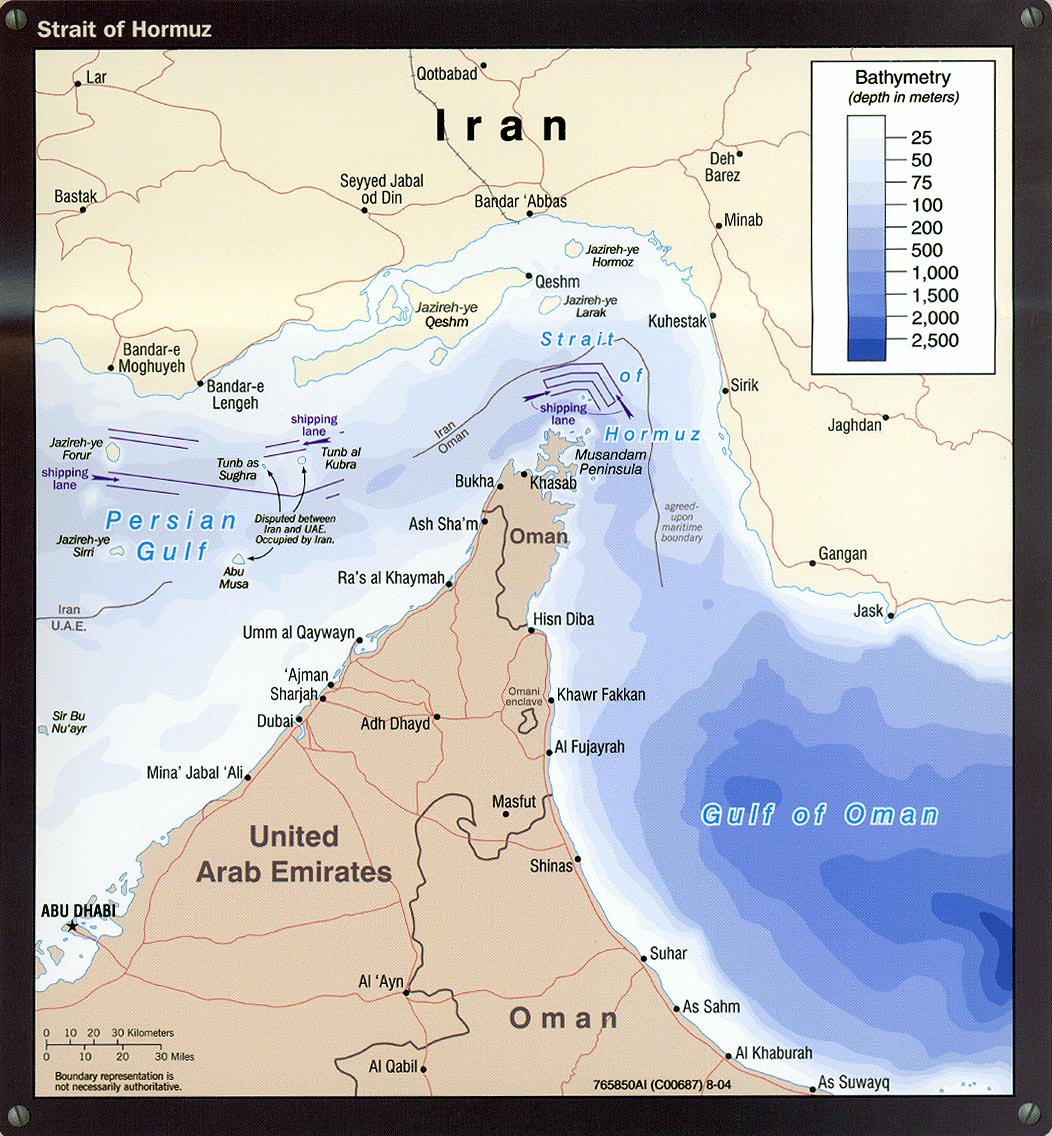
I saw some of it and I am certainly no expert. However, I did serve in the military and I had a fair understanding of what things were like over there. I had this understanding because of a secret briefing that I received in 1980, because I was a Navy Aircrew man, before I went on deployment to the Gulf of Oman, near the Straits of Hormuz. I remembered that briefing and had read more about Iraq, it's history and peoples since then, this gave me insights that most Americans did not have.

If I could see what would happen certainly many others in the military and State Department must have foreseen it, but those who saw the clearly were ignored and now we have been fighting brush-fires in Iraq for five years, 4,ooo American service men and women are dead and Iraq is in tatters.

The Democratic Candidates for president promise to "bring the troops home." OK. The American people "want the troops home." I believe that such a move would lead to civil war and a far greater blood bath in Iraq. An American pull out at this time would lead to a holocaust. I could also pour over Iraq's borders and destabilise other (somewhat pro-American) nations in the region.

We toppled the de facto government in Iraq and blinded by our on democratic mythology, tried to establish democracy in a land and culture unprepared for democracy. We NOW have a moral obligation to see this thing through to the end. We started it by invading the country and toppling its two-bit thug dictator.

Saddam was a murderous thug, but it is not our duty to remove thugs from power in other countries, but now that we have done the deed it would be cowardly to shrink from the obligations that we have brought on ourselves by our own free choice. It would be more immoral for us to simply up and leave Iraq now, than it is to continue there until a stable (which will not be a democracy) is established, even though it means that we will, for the foreseeable future, have to bring a handful of brave young Americans home in body-bags, as we are now doing.

We made a very bad decision. The question is do we have the moral courage and intestinal fortitude to live up to the obligations that that bad decision has put on our shoulders?

Coram Deo,
Kenith

Tuesday, March 11, 2008

Luther and Rome


Tonight I once again watched the movie Luther, starring Joseph Fiennes. This is a great movie and I recommend it to everyone. With that said I do have to add that it is a movie and therefore it is not to be taken has a total history of Luther or his times. But it is, I believe, a fairly accurate account of those parts of history that it touches.

Luther was a very interesting man. He was a man of great courage and conviction. He was, I believe, greatly used by God to accomplish much good. He was also a man with many faults, and those faults did much to damage and divide the same faith that he desired to see reformed.

Luther was a brilliant man and a passionate man. Much in what he wrote is wonderful to read and uplifting to the soul, but some of what he wrote is shameful and has done a great deal to blemished His name and work.

I know some Roman Catholics who despise him and count him among the worst of criminals. They see the Western Church divided into so many sects and blame Luther for those divisions. I think those who think that way have it backwards. Luther did not divide the Church and he did not bring about its division. The Church was divided by the acts of Rome.

Luther wrote his Ninety-Five Theses against the abuses then common in the sale of indulgences. The paper was not written against the Pope or Rome, in fact Luther was surprised to learn that the Pope was against what he had written. Pope Leo X was more disturbed by the loss of revenue that followed the publication of Luther’s Theses than he was by the doctrines in them. Pope Leo was using monies raised by the sale of indulgences (much of it coming from Germany) to build St. Peter’s Basilica. After Luther attacked the despicable practice of indulgences (forgiveness of sin and salvation were commodity offered by the Church for cash money) the money coming into Rome through the selling indulgences in Germany dropped off substantially.

Rome, Pope Leo, caused the breach. He, not Luther is more responsible for the initial division in the Western Church. Leo, like so many of the Renaissance Popes before him, was a corrupt man of the world who cared little for spiritual matters. Had there been a godly man seated in the Chair of St. Peter the Church would not have been torn apart.

Luther’s actions and the actions of others were in response to the wrongful response of Rome. Every person will stand before God and answer for his/her sins. Luther was a man with many faults and when he sinned he did so passionately, but he was also a man of faith who repented passionately as well. Christ’s blood covers the sins of all of us who repent (truly) and I believe Luther was such a man. I do not believe Pope Leo X was such a man. I don’t believe he will reside eternally in the same place as Luther and I believe Luther will be resurrected, even with his many failings, to eternal live in Jesus Christ.

This is not written as an anti-Roman Catholic rant. There is much about the Roman Catholic Church that I love and respect. There have even been times when I have wished that I could return to Rome (but it is not possible). I also desire to see Roman Catholics, Protestants and Eastern Christians come together and work toward Christian unity as the Scripture teach. I also believe we must call a spade a spade, but we should do so in a loving, and when possible, diplomatic way. It does none of us any good when we call the other guy’s spade a “damned shovel.”

Coram Deo,
Kenith

Wednesday, March 05, 2008

The internet is a great tool and I use it often. There are so many useful tools on it for study and research. When I discovered Google Book Search, I was like a child in a candy store. I love old books and they have countless numbers of old books that have been scanned and placed there to be read or downloaded and best off all is these old Public Domain books are FREE.

I’ve already downloaded dozens of books onto a flash drive so I can carry them with me anywhere and everywhere. The last latest book, downloaded from Google Books, that I’ve read was written by Henry Caswell, an Anglican minister. Caswell’s book was published in 1843 and has the lengthy title. It is The Prophet of the Nineteenth Century: or, the Rise, Progress, and Present State of the Mormons, or Latter-Day Saints, to Which is Appended an Analysis of the Book of Mormon. The book is a bit dated, but it also has some interesting insights.

It was an interesting book. Rev. Caswell actually visited with Joseph Smith in Nauvoo, Illinois before he wrote the book. I am still reading Bushman’s biography of Joseph Smith. I’m well past half way through the book. I’ve been working a lot (more than 90 hours last week), and I was working a working a unit shutdown. Caswell book is interesting and I learned some important things from it.

Reading Caswell and Bushman, as well as many other items about the Mormonism it is clear that the church is based on some very serous heretical teachings. They do use a lot of biblical language and speak of Jesus, salvation and countless other things associated with the Christian Faith, but they made a major break with the historic faith of Christianity. The Mormon Church is very much not a Christian religion. Joseph Smith invented his own religion and gave it a veneer that can be used to trick people into believing he was leading a Christian revival, when he was actually inventing a religion that was and remains opposed to true Christianity.

Coram Deo,
Kenith
Ps: I'm only supposed to work 72 hours this week.

Monday, February 25, 2008


I have downloaded and read a number of really good books from Google Book Search. These downloadable books are all in public domain and are free on the web for anyone interested in getting them. One book that I've downloaded is an 1857 publication of a number of Charles Hodge's articles that had been previously published in the Princeton Review. The book is titled Essays and Reviews, it contains 18 articles and is 683 pages in length.


Dr. Hodge has been long admired as one of the great Reformed Theologians of the 19th Century. It was certainly a brilliant Christian theologian. The articles that I wish to mention here are not theological in nature, however since theology touches all of life, Hodge's theology does play an important part in how he sees the issues discussed.


Article XIV is titled "Slavery" and it is a reply William E. Channing’s 1836 book of the same name. I have read a good deal on slavery as it existed in the American South. I have read the ideas of rabid Abolitionists in the North and fanatical Southern Fire Eaters. Hodges article is, in my opinion, the best thing I've ever read on the subject from a truly biblical vantage point. Hodge stands on the biblically defendable middle ground between these two extreme positions.


In our day, the Abolitionists view is mostly taken for granted as an undeniable truth. But if the Scriptures of the Old and New Testament are correct than the Abolitionists must be wrong. Does this mean Southern Slavery was biblical are justified? NO.


The one fact (Abolitionists arguments are anti-biblical) does not lead to the conclusion that Southern slavery was just or biblically defensible and that is why Hodge’s is article is so good. He makes that point very clear and is a clear and strong supporter of the emancipation and freedom of slaves, but he does so on biblical grounds.


In Article XV Hodge’s essay is titled “Emancipation.” In this article he is responding to an essay by Robert J. Breckinridge, which appeared in the October, 1849 issue of the Princeton Review. This too is a very good and well thought out set of ideas. It is clear that Hodge, even at this point, still holds to the views that he had written in the earlier article on slavery.


In this essay he is arguing that, while slavery in and of itself is not necessarily sinful, if slaves are dealt with biblically as Christians should treat slavery, then such treatment must lead to the improvement on the slaves to the point where he/she must be emancipated out of slavery.


Dr. Breckinridge, a Presbyterian theologian of Kentucky, was a strong supporter of a change to the Kentucky Constitution that would lead to the freedom of Negro slaves in that state. Even though only 20% of Kentucky voters were slaveholders, the measure went down to overwhelming defeat.


Hodge wrote to explain how such a thing could happen and also to argue that emancipation for the slaves was inevitable, the only question was how it would come. Would it be by godly means as Breckinridge and others were trying to accomplish or would it be by other means.


He spends some time near the end of the essay discussing some of the more sinful laws that had been passed in the slaveholding states in the attempt to suppress and undermine the family structure of black slaves and other laws passed so as to keep the slaves in a state of ignorance.


Hodge speaks with the voice of a prophet at the end of this essay when he, “It is a national sin, as it must be committed by the people in their capacity as a commonwealth, and, therefore, will inevitably lead to national calamity. The history of the world is one continued proof that God visits the iniquities of the fathers on the children of the third and fourth generation of those who hate him… So sure, therefore, as a righteous God rules among the nations so certainly must the attempt to perpetuate slavery by keeping the slaves ignorant and degraded, work out a fearful retribution for those the descendents of those by whom such an attempt is made.”


In the article, despite his warning, it is clear that Hodge did not foresee the coming war between North and South. He believed that emancipation could still be accomplished by godly means, because there were many reasonable Christians in both North and South.


He was correct about there being reasonable Christians in both sections, but in North and South the hot heads carried the day we reaped the whirlwind and it affects as re still felt even to this day.

Coram Deo,
Kenith

Monday, February 04, 2008

A Hero of Mine

I love history, but it’s not just because I like to know trivia. I love history because it is a valuable thing to know. I enjoy all history and find that there are nuggets of value in most any time in history.

American history is one of my favourites. I especially enjoy era just before, during and after the War for Independence. I find our history of the writing and ratification of the U.S. Constitution fascinating as well. The Constitution, its history and the growth development of the United States under the Constitution also intrigue me.

I have many heroes from the past. I have biblical heroes, I have heroes in Church history and I have secular heroes as well. Some of my greatest heroes are Americans. I hold Patrick Henry, George Washington, Sam Adams, etc… all in high regard and count them as American’s worthy of hero status, but the American I hold in the highest regard is not among the giants of America’s founding Fathers.

The American that I regard as the greatest American is Robert E. Lee. Lee was the son of Henry “Light Horse Harry” Lee, who was one of George Washington’s best cavalry officers during the War for Independence. Henry was also served as governor of Virginia and was a strong proponent of the Constitution during ratification. He also served as a U.S. Congressman. It was Congressman Lee, who had known George Washington since childhood, who gave the Eulogy at Washington’s funeral. It was Henry Lee who said that George Washington was “First in war, first in peace and first in the hearts of his countrymen.”

Robert E. Lee’s father was a hero of the Revolution and loomed large in many respects, but he was barely known by Robert. Robert was born when his father was old and Harry did when the boy was only 11, but even then Harry had been away for many years before than. He had gone to the Caribbean for health reasons four years earlier and was on his way home to Virginia but died in Georgia and never made it back home.

Robert did not grow up with great wealth. The family’s wealth had been lost in land speculation by his father, so Robert knew want as a child. He did have a famous father and important family connections and these did benefit.

At WestPoint he was the first cadet to graduate without ever receiving a single demerit and finished second in his class. Lee spent from then until Virginia seceded from the Union as an officer in the U.S. Army.

Before the commencement of hostilities between North and South, the head of the Army, Winfield Scott, said that Lee had the greatest military mind in the Army and Lincoln offered him the job as Commander of U.S. forces. Lee declined the job, resigned his commission in the Army and returned to Arlington, his home just across the Potomac River from Washington D.C.

Lee knew the score when he decided to defend Virginia and the South against the United States. The North had overwhelming superiority in manufacturing and man power. He was not deluded as so many braggarts and hot heads tend to be. Lee knew the odds for victory against the North were slim, but he did what he believed was his duty to the Constitution, his “country” Virginia and for his family.

Lee through his lot in with the Confederacy, which he knew to be greatly inferior to the North. Because it was, in his mind, the only right and honourable thing for him to do. The War cost him his home and the lives of many dear friends.

After the War he had nothing, but he was very famous. An Insurance company approached with an offer. They offered him a pile of money that would make him a very rich man. He told them that he could not do anything for them that was worth so much. They told him that he would not have to do anything. The money was his if he would allow them to use his name to promote their product.

Lee gave them a flat NO. He was willing to live in poverty and work hard but his good name was all that he had left and it was not for sale or lease. Lee did get a job as president of Washington College. Today that college is known as Washington and Lee University.

Lee was a great general and even more importantly he was a humble Christian.

Coram Deo,
Kenith

Monday, January 28, 2008

Louisiana Presidential Primaries


I don't write about politics very often, though I do vote almost every time there is an election in my area. I do admit to missing one or two local elections but that is very rare.

As an eighteen year old teenager, like almost everyone in Louisiana back then, I joined the Democratic party and when I voted I usually voted democratic. I did not vote in the 1980 presidential election even though I was twenty at the time. I was in the Navy and at the time of the election I was on board the USS Francis Hammond. The Francis Hammond, FF 1067, was at the time of the election deployed to the Gulf of Oman, which is near the Straits of Hormoz just off the coast of Iran, but I very strongly supported Ronald Reagan. As one serving in the US Armed Forces I had a strong dislike for the feeble leadership of Jimmy Carter. Reagan was the only Republican I would have voted for that then.

Four years later, I was back in South Louisiana and still a moderately loyal member of the Democratic Party. I was married, and my wife was pregnant for our first child. I was working as a labourer, doing odd jobs at a local refinery. I met a guy at the plant that was very active in the Democratic Party and he had been a delegate at an earlier Democratic Presidential convention. He told me that he had a copy of the Democratic Party Platform. I mentioned that I would like to read it and he loaned it to me.

I took the Platform home, read it from cover to cover and returned it to it's owner. The next time I had a day off I went to the parish courthouse and changed political parties. I was disturbed by what I read in the platform.

I was now a Republican and got more involved in the political process. I now voted "mostly" Republican, but I did vote independent on occasion and for Democrats I liked if they were running for local offices.

I was never a "party" guy. I have always been willing to vote for the person I thought best even if they belonged to the "liberal" party, because there were still some good Conservative Democrats.

When the Republicans had control of the Congress and the Presidency they proved to be just as addicted to pork (though it was a different cut off the pig) as the Democrats had been. I got more and more disgusted by them, so when I moved and had to update my voter registration, I decided to register independent. I no longer belong to any political party, and I've been registered this way for nearly four years.

Now to the Primary. I will not be able to vote in the primary because you have to be a member of one of the major parties to participate and I am not. With that said, there is NO ONE one the Democratic side of the ticket that I could, with a good conscience, vote for. On the Republican side, depending on who wins the nomination, I MAY BE able to vote for their candidate next November. IF I do I may have to hold my nose when I do it. I may decide to vote third party, but we are to far from that day to even think about it right now. I did vote third party once before (and no it was not for Ross Perot). It is always an option.

Deo Vindice,

Kenith
What I'm Reading

I don't read very fast, in fact I read at about the pace of a crippled turtle, but I do try to read when ever I have spare time. These days I'm reading a number of things. My latest read was John Nevin's 1840's book, A Mystical Presence: A Vindication of the Reformed or Calvinistic Doctrine of the Holy Eucharist. I found this to be a very telling and exciting book. I found Charles Hodges review on the book and I've printed it out and hope to read it soon.

I'm meandering my way through a new biography about Mormon founder Joseph Smith. The books is Joseph Smith: Rough Stone Rolling by historian Richard Bushman. Bushman is a well respected historian and a Mormon.

I'v also started reading the writings of Pope Gregory the Great. These writings are in the Second Series of the Nicene and Post-Nicene Fathers volume XII. I've read the editor's Prolegomena and I'm now reading Gregory's The Book of Pastoral Rule. When I finish this I plan to continue reading Pope Gregory's letters.

Coram Deo,
Kenith

Tuesday, January 15, 2008


A few days ago I became involved in a discussion about the legality or constitutionality of secession. I have long believed that the secession one or more states from our federal union was and is lawful under the United States Constitution. I wrote about this issue a number of years back that article is here: The Constitution and Secession

The discussion I'm presently involved in is at the history section of Christian Forums.

Before the War Between the States (some folks call it the Civil War) New England, which was the section most hostile to Southern secession, had a long history of secessionist movements. This has been brought up in the discussion and here are some of the points made on that issue:

++++++
John Quincy Adams speaking before the Historical Society of New York in April (I think) 1839:
"With these qualifications we may admit the same right as vested in the people of every state in the Union, with reference to the General Government, which was exercised by the people of the United Colonies with reference to the Supreme head of the British Empire, of which the formed a part; and under these limitations have the people of each State in the Union a right to secede from the Confederated Union itself. Here stands the right! But the indissoluble union between the several States of the Confederated Nation is, after all, not in the right but in the heart. If the day should ever come (may Heaven avert it), when the affections of the people of these States shall be alienated from each other...far better will it be for the people of the dis-United States, to part in friendship from each other, than to be held together by constraint..."

In 1842 we find that John Quincy Adams presented a secession petition in the U.S. Congress for some of his fellow Massachusetts citizens:
Congressional Globe, volume XI, page 977
MONDAY, January 24th.--In the House. Mr. [John Q] Adams presented the petition of sundry citizens of Haverhill, in the State of Massachusetts, praying that Congress will immediately adopt measures favorably to dissolve the union of these States.
First. Because no union can be agreeable and permanent which does not present prospects for reciprocal benefit; second, because a vast proportion of the revenues of one section of the Union is annually drained to sustain the views and course of another section, without any adequate return; third, because, judging from the history of past nations, that union, if persisted in in the present state of things, will certainly overwhelm the whole nation in destruction.


Here are the resolutions of 1844 that were the approved by the Mass. Legislature and signed by the governor:
1. Resolved, That the power to unite an independent foreign State with the United States is not among the powers delegated to the General Government by the Constitution of the United States.
2. Resolved, That the Commonwealth of Massachusetts, faithful to the compact between the people of the United States, according to the plain meaning and intent in which it was understood and acceded to by them, is sincerely anxious for its preservation, but that it is determined, as it doubts not the other states are, to submit to undelegated powers in no body of men on earth; That the project of the annexation of Texas, unless arrested on the threshhold, may tend to drive these states into a dissolution of the union, and will furnish new calumnies against republican governments of exposing the gross contradiction of a people professing to be free, and yet seeking to extend and perpetuate the subjection of their slaves.
3. Resolved, That his Excellency, the Governor, be requested to transmit a copy of the foregoing resolves to each of the Senators and Members of the House of Representatives of this Commonwealth in the Congress of the United States.
4. Resolved, That his Excellency, the Governor, be requested to transmit a copy of the same resolves to the Executive of the United States and of the several States. Approved by the Governor, March 15, 1844

+++++++++
This is a fluid discussion and so in response to the other guy in the discussion, I next turn to the Articles of Confederation. The Articles formed the first version of the United States, but confederated government formed by the Articles weas soon replaced by the U.S. Constitution, which formed a wholly new form of government and created a wholly new version of the United States. The U.S. under the Articles was short lived though it claimed to be a perpetual union. I start by quoting the preamble to the Articles:

++++++
To all to whom these Presents shall come, we the undersigned Delegates of the States affixed to our Names send greeting.
Articles of Confederation and perpetual Union between the States of New Hampshire, Massachusetts bay, Rhode Island and Providence Plantations, Connecticut, New York, New Jersey, Pennsylvania, Delaware, Maryland, Virginia, North Carolina, South Carolina and Georgia.

Notice that the Articles proclaimed a perpetual union, but in less than seven years this perpetual union was dissolved by those same states when nine of the thirteen ratified the new Constitution of the United States.Remember what Article VII of Constitution says? It says, "The Ratification of the Conventions of nine States, shall be sufficient for the Establishment of this Constitution between the States so ratifying the Same." So according to the Constitution when nine states ratified the Constitution they would cease to be part of the "perpetual Union between the States" under the Articles of Confederation and would form a new Union under the Constitution. As I mention in the earlier posts, North Carolina and Rhode Island did not immediately ratify the Constitution and were not part of the Unites States when the New U.S. came into being under the new Constitution. All the other states had seceded from the U.S. under the Articles and formed a new U.S. under the Constitution.
+++++++

Coram Deo,
Kenith

Saturday, January 05, 2008


Life


I love life. It is all that I know. My life began 48 years ago in my mother's womb. The meaning of life is an all together different thing than what is life. All our lives are different and we all see things from different vantage points. Still all are lives are finite and relatively short. To live for 100 years is, for us,a very long life, still this is a relatively short period of time.

What is important in this life? Is it pleasure? Is it adventure? Is it doing great things?

I don't think any of the items mentioned above is (in the big picture) all that important. The great deeds preformed by men will all be forgotten in the long run.
We tend to think the exploits of great military leaders to be acts of greatness. We think of Alexander's conquest of Persia or Julius Caesar's conquest of Gaul to be great acts of greatness, but are they really? I don't think so.

I admit that these are important items in Western history. Alexander's conquest brought Hellenistic culture to much of the world. This laid the foundation, linguistically, for the coming of the Gospel of Jesus Christ. Julius Caesar and the Romans united the Mediterranean world so that Gospel of Christ could quickly spread without having to cross national boundaries.

God used the selfish exploits of ungodly men and military accomplishments of egocentric leaders such as Julius Caesar and Alexander of Macedonia to lay the groundwork for the coming Saviour. We live in a fallen world and big events are mostly the acts of ungodly evil men, but even when men do things for evil, God uses these same acts to accomplish His holy will, which is for good and for the salvation of the world.

The meaning of life for the Alexander or Caesar was all about "ME." Power for ME. Glory for Me, Wealth for ME. Sexual exploits and pleasure for ME. Monuments for to ME. ME is the god of Men like Alexander and women like Cleopatra and their god is a god of death and destruction.
The God of Scripture is the God of life and salvation. In the Bible the writer of Ecclesiastes deals with the meaning and purpose of human life. It is, as a whole, very depressing. In it we find a writer who has sought meaning and purpose in armies and he finds this to be void of purpose. He seeks fulfilment in sexual exploits and is disappointed. He seeks to make life worth living by architectural achievements that would last a millennia and this too left him without meaning. In the end he repents and concludes "Fear God and keep his commandments, for this is the whole duty of man."

The writer of Ecclesiasties found out the truth. All else is vanity and death.

Coram Deo,
Kenith